Skip links
PUBLICATIONS & PATENTS
Total 11
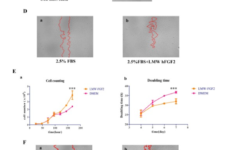
Supplement of secreted recombinant low molecular weight human fibroblast growth factor 2 in culture media enhances in vitro bov

With the annual increase in in vitro bovine embryo production, understanding oocyte maturation is becoming more important. Previous studies have shown that oocyte maturation can be improved by adding bovine additives to in vitro maturation media. Among the additives, human fibroblast growth factor 2 (hFGF2) is well known for its positive influence on the growth rate and quality of cells and oocytes. However, the effect of LMW-hFGF2, one of the isoforms of hFGF2, on bovine in vitro maturation has not yet been identified. Therefore, the goal of this study was to elucidate the effect of LMW-hFGF2 on bovine oocyte maturation. Vectors expressing LMW-hFGF2 were cloned and transfected into cells. Afterward, secretion of LMW-hFGF2 from cells was confirmed, and used to assess the effect LMW-hFGF2 on cells and bovine oocytes. LMW-hFGF2 improved bovine oocyte maturation and embryo developmental competence. Laboratories can use LMW-hFGF2 in bovine oocyte culture media to improve in vitro embryo production success rates.

2023.03.31 | 논문
Research in Veterinary Science | 2022 | 153 | 1
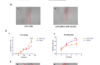
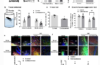
Prenatal glucocorticoid exposure selectively impairs neuroligin 1-dependent neurogenesis by suppressing astrocytic FGF2–neurona

Exposure to maternal stress irreversibly impairs neurogenesis of offspring by inducing life-long effects on interaction between neurons and glia under raging differentiation process, culminating in cognitive and neuropsychiatric abnormalities in adulthood. We identified that prenatal exposure to stress-responsive hormone glucocorticoid impaired neurogenesis and induced abnormal behaviors in ICR mice. Then, we used human induced pluripotent stem cell (iPSC)-derived neural stem cell (NSC) to investigate how neurogenesis deficits occur. Following glucocorticoid treatment, NSC-derived astrocytes were found to be A1-like neurotoxic astrocytes. Moreover, cortisol-treated astrocytic conditioned media (ACM) then specifically downregulated AMPA receptor-mediated glutamatergic synaptic formation and transmission in differentiating neurons, by inhibiting localization of ionotropic glutamate receptor (GluR)1/2 into synapses. We then revealed that downregulated astrocytic fibroblast growth factor 2 (FGF2) and nuclear fibroblast growth factor receptor 1 (FGFR1) of neurons are key pathogenic factors for reducing glutamatergic synaptogenesis. We further confirmed that cortisol-treated ACM specifically decreased the binding of neuronal FGFR1 to the synaptogenic NLGN1 promoter, but this was reversed by FGFR1 restoration. Upregulation of neuroligin 1, which is important in scaffolding GluR1/2 into the postsynaptic compartment, eventually normalized glutamatergic synaptogenesis and subsequent neurogenesis. Moreover, pretreatment of FGF2 elevated neuroligin 1 expression and trafficking of GluR1/2 into the postsynaptic compartment...

2023.03.31 | 논문
Cellular and Molecular Life Sciences | 2022 | 79 | 6
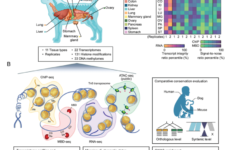
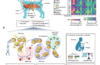
Integrative mapping of the dog epigenome: reference annotation for comparative inter-tissue and cross-species studies

The domestic dog has become a valuable model in exploring multifaceted diseases and biology important for human health. Large-scale dog genome projects produced high-quality draft references but still lack comprehensive annotation of encoded functional elements. Through the integrative next generation sequencing of transcriptomes paired with histone marks and DNA methylome profiling of 11 adult tissue types, implemented in a cross-species approach, we generated a reference epigenome of a domesticated dog. Using genome orthologues and synthenies, we deciphered the dog’s epigenetic code by defining distinct chromatin states, allowing for genome-wide, integratable data production. We then characterized somatic super-enhancer landscapes and showed that genes mapped on these regions are associated with a broad range of biological and disease traits and are traceable to their tissue-of-origin. Ultimately, we delineated conserved epigenomic changes at the tissue- and species-specific resolutions. Our study provides an epigenomic blueprint of the dog for comparative biology and medical research.

2023.03.31 | 논문
bioRxiv | 2022 | 1 | 1